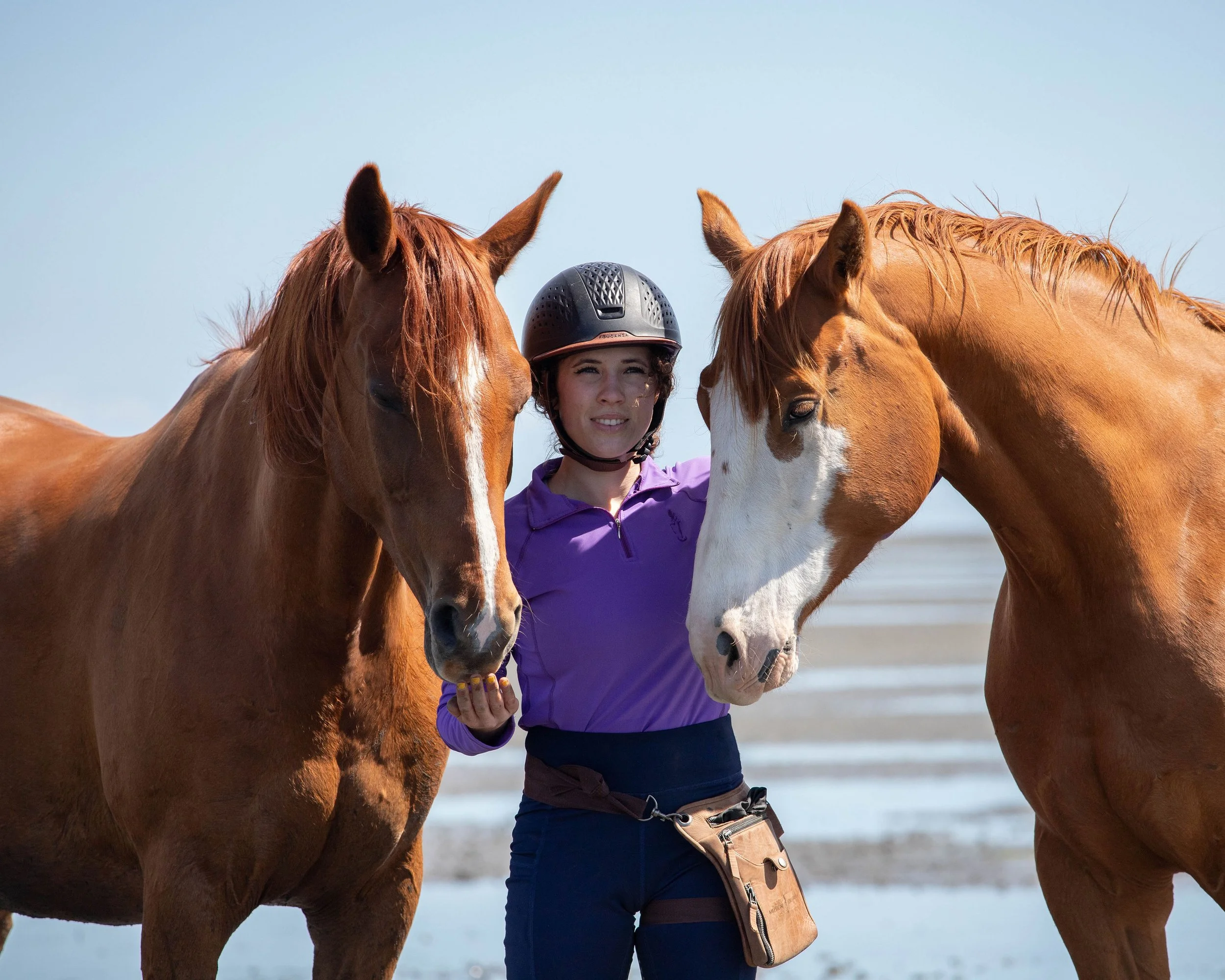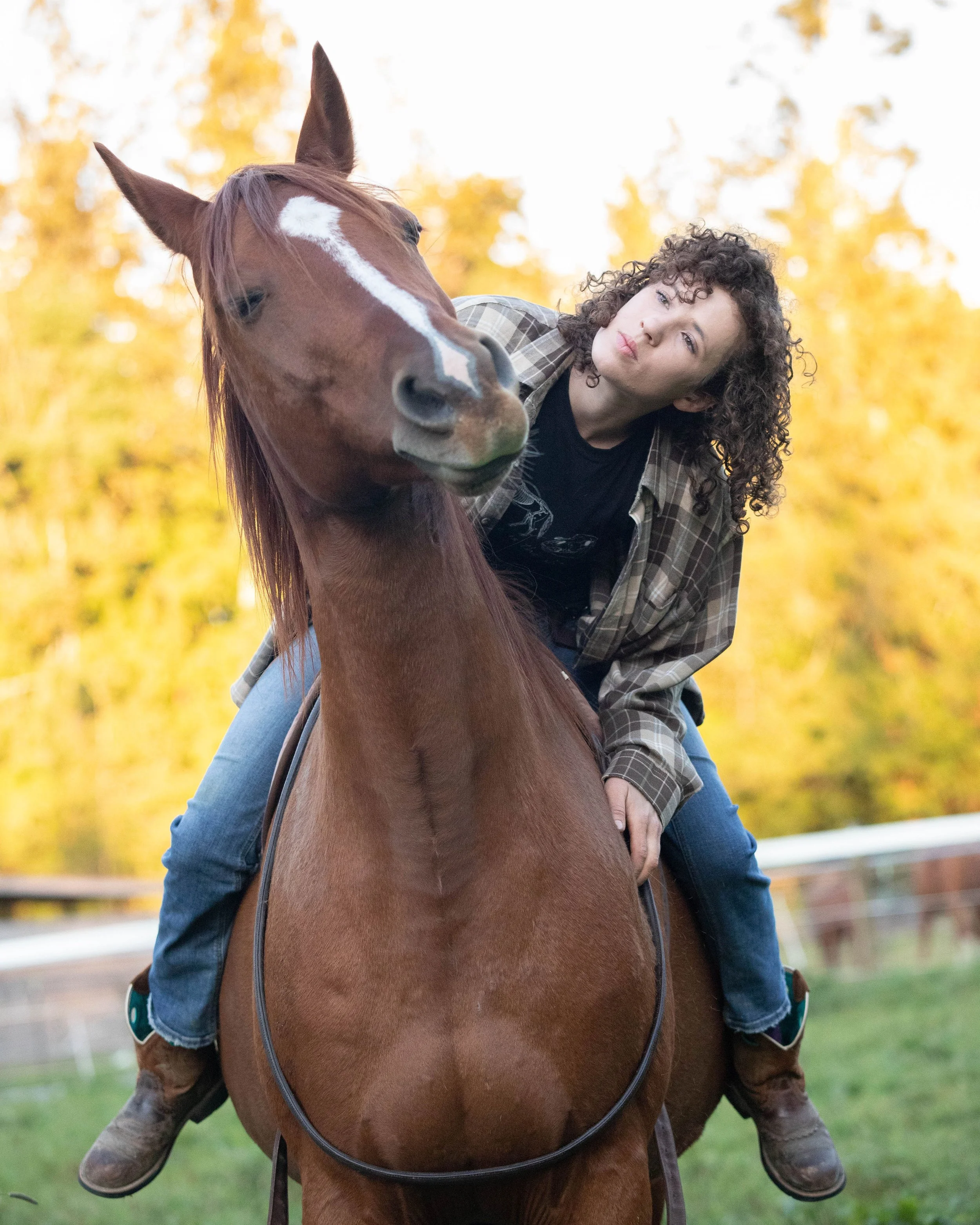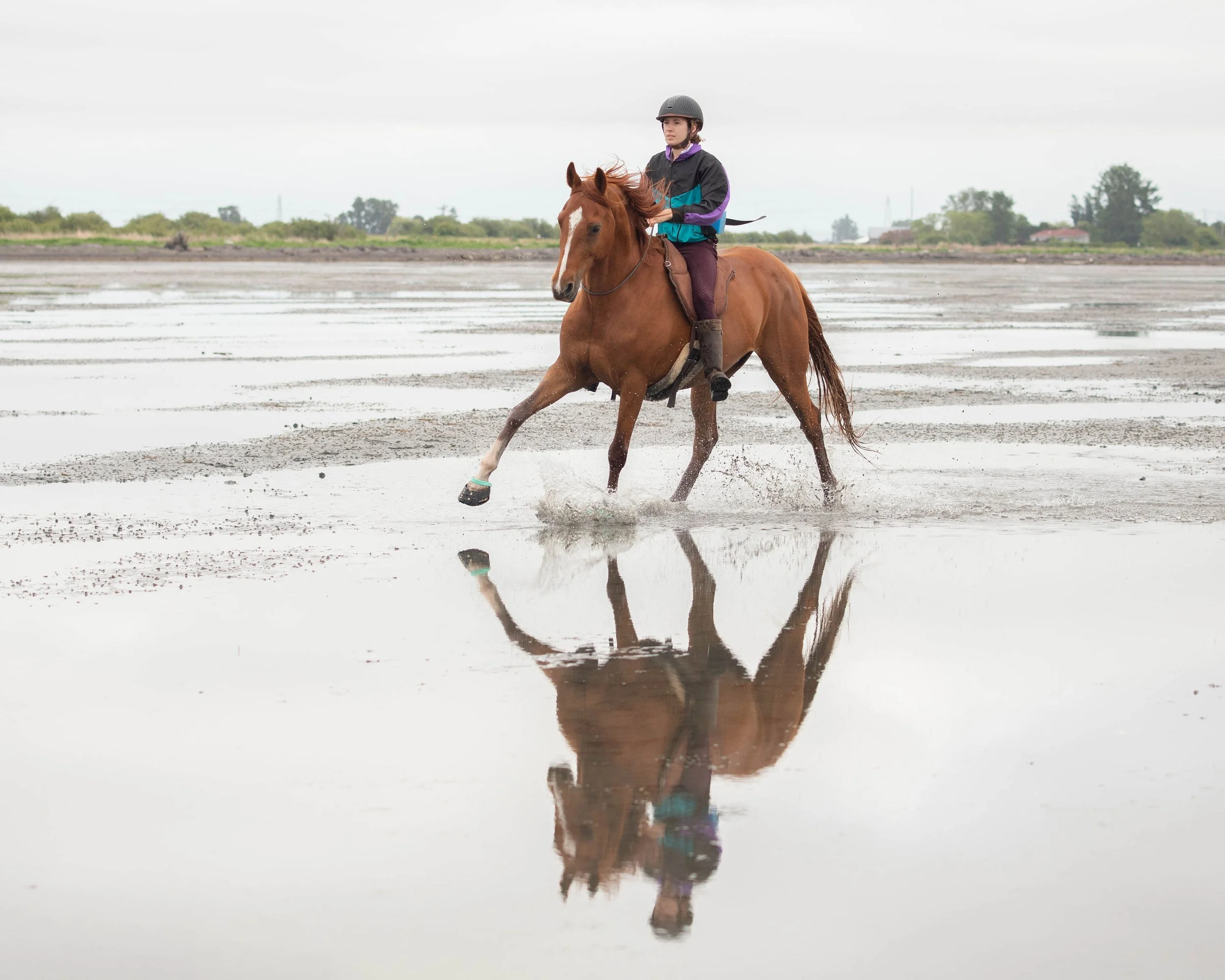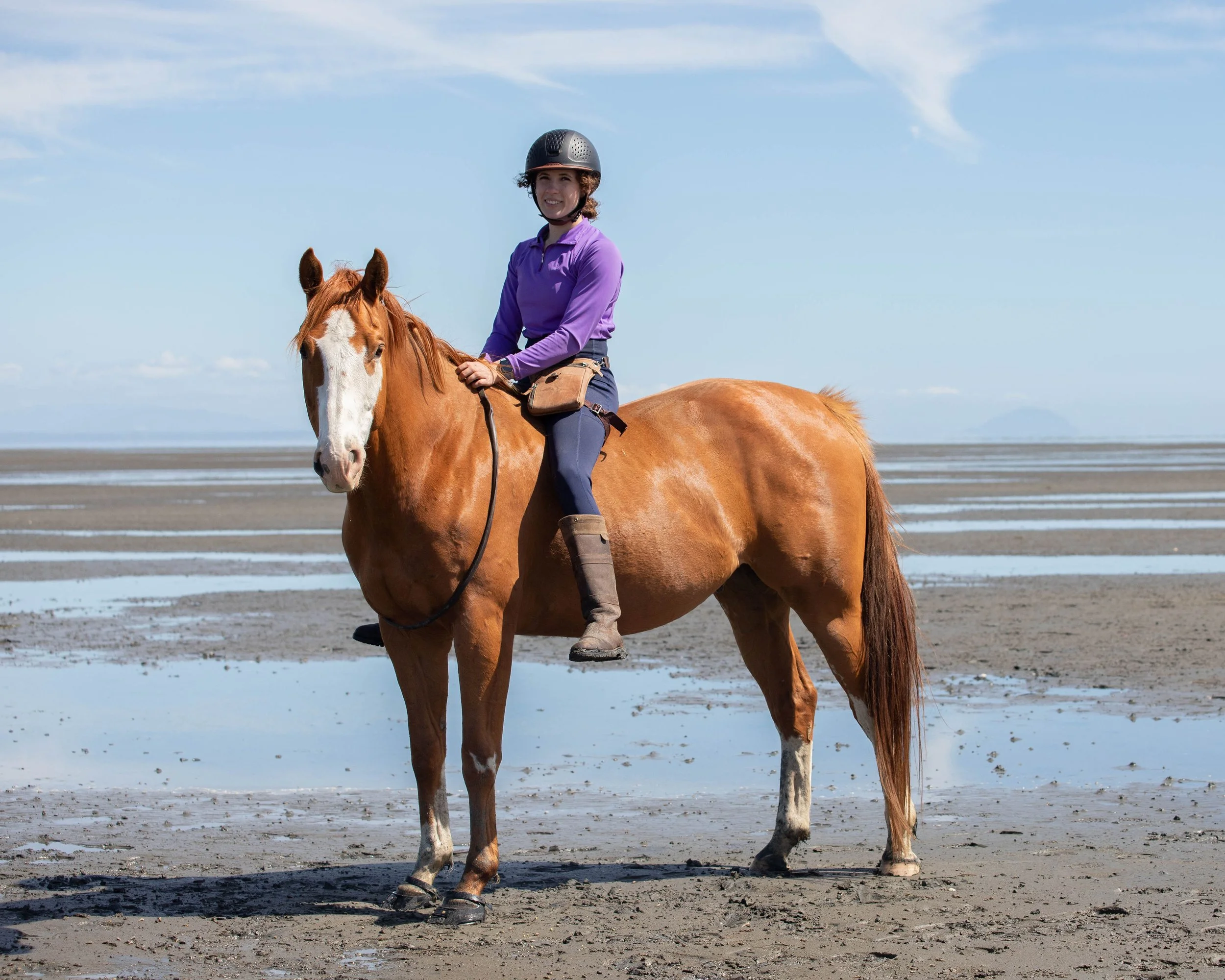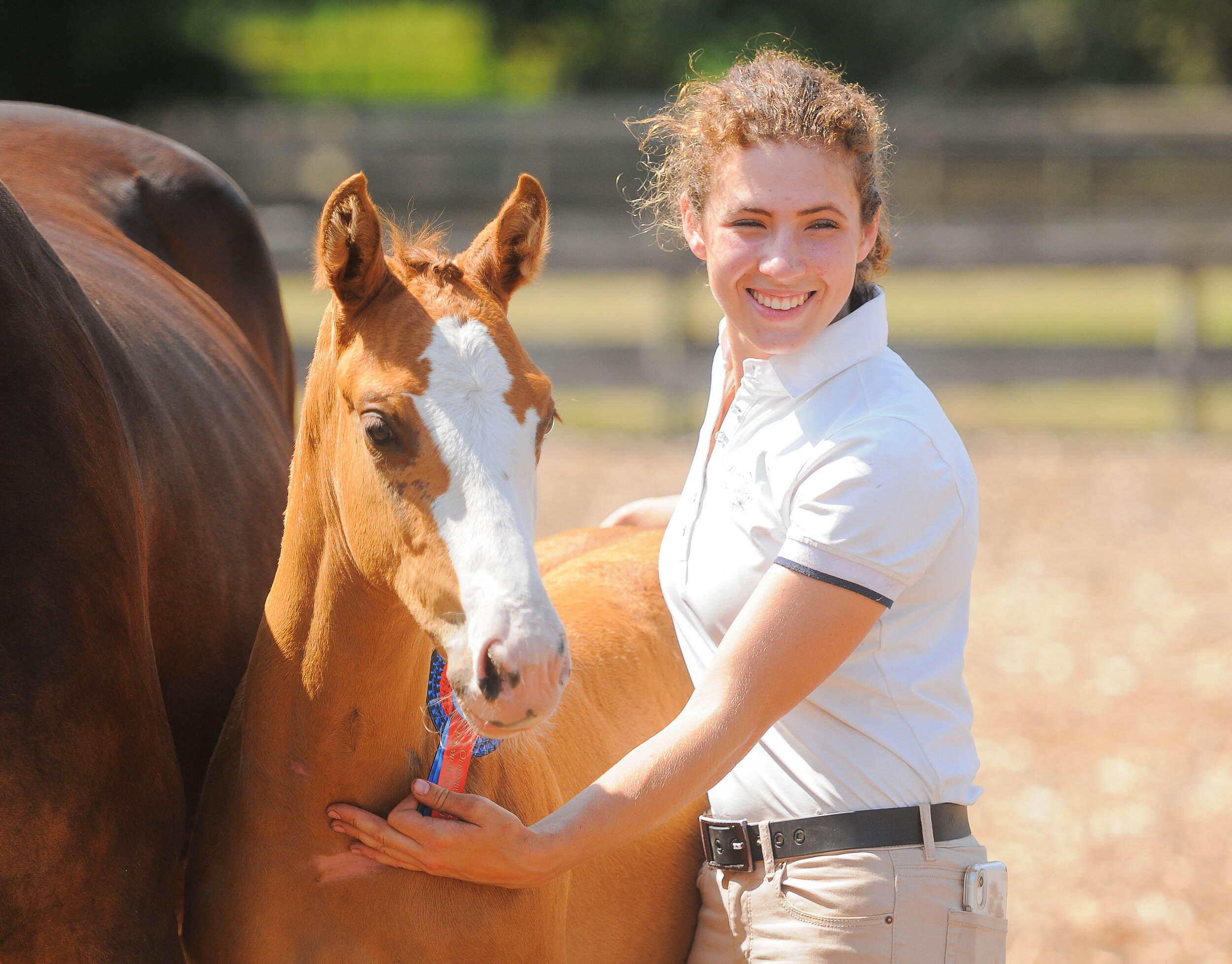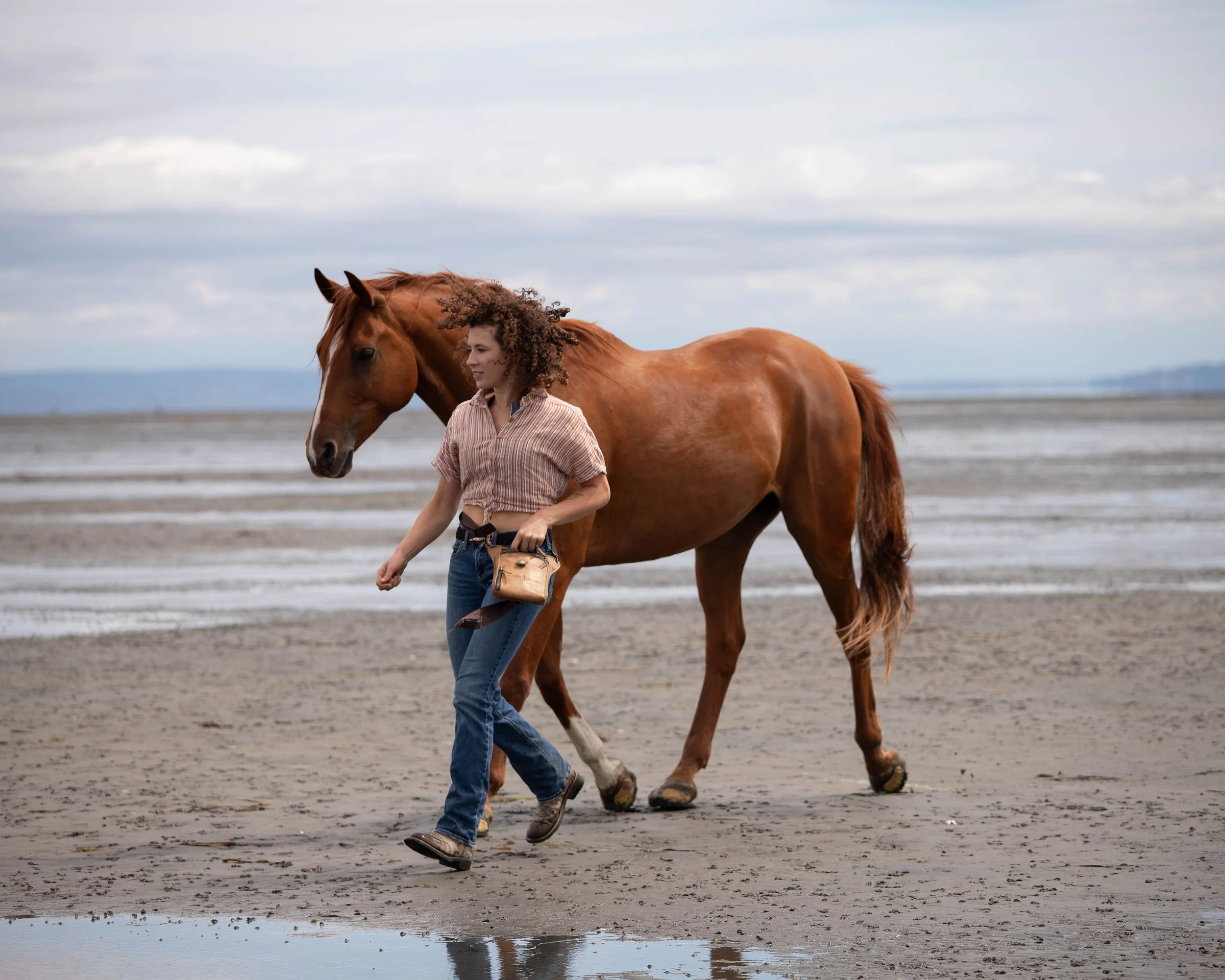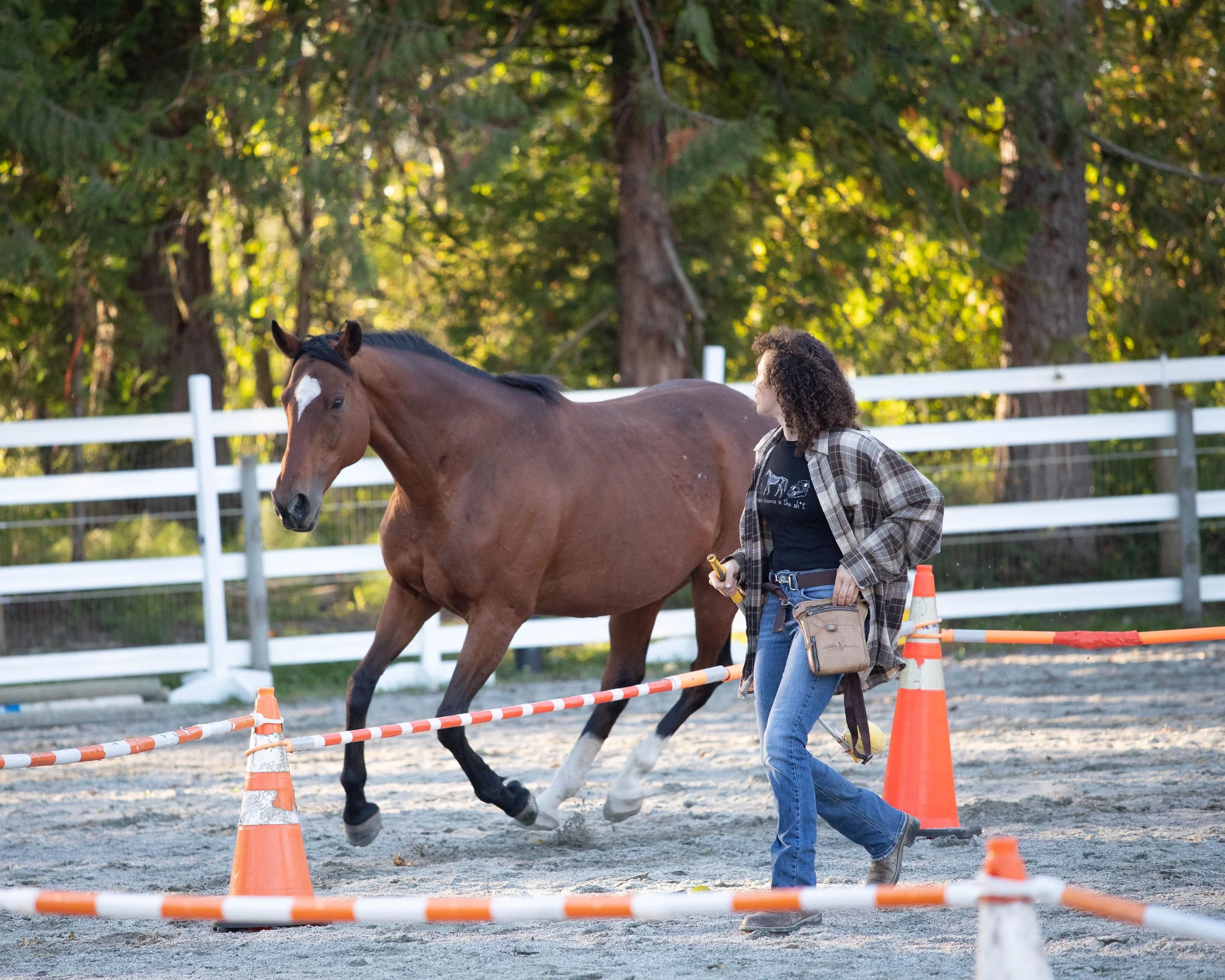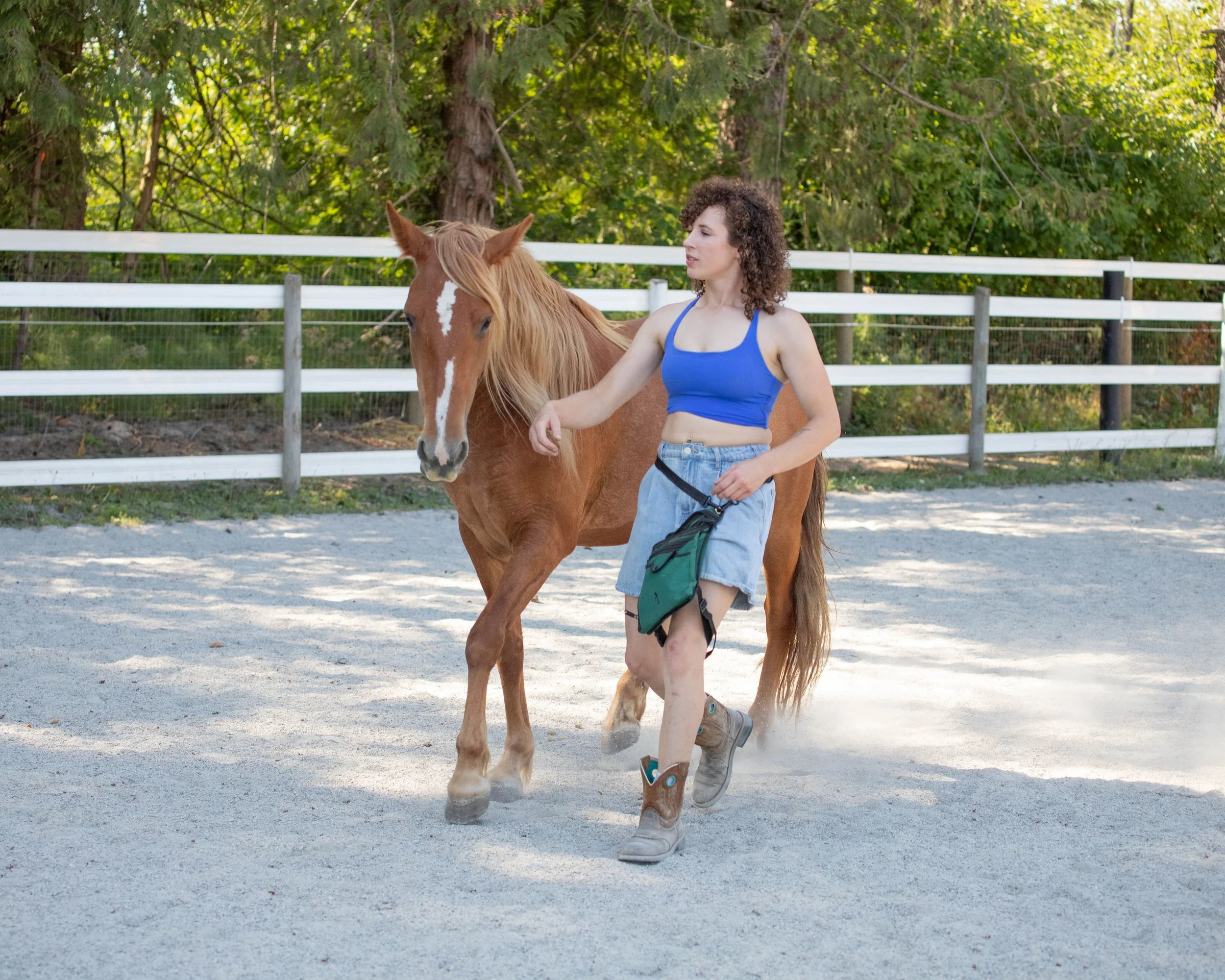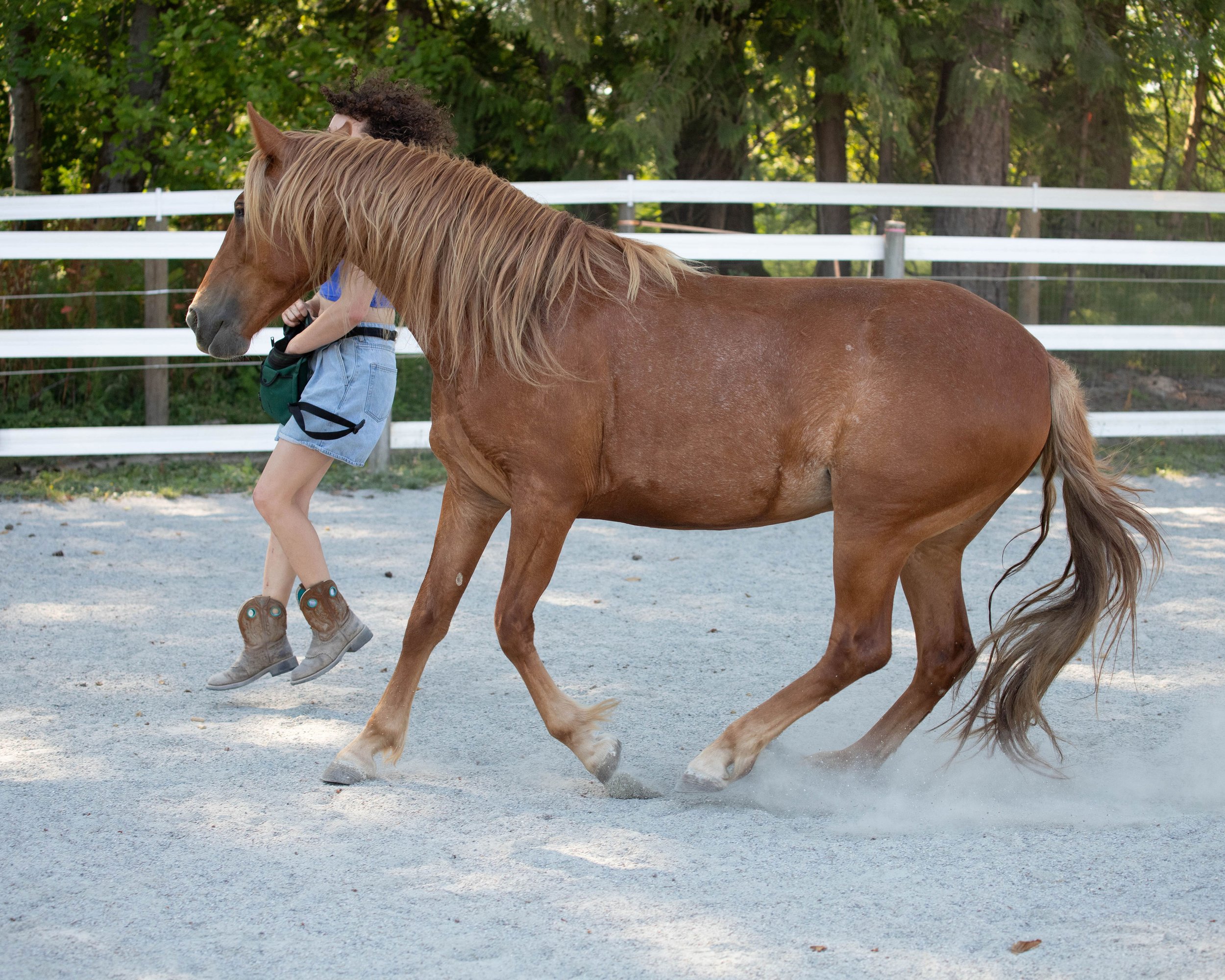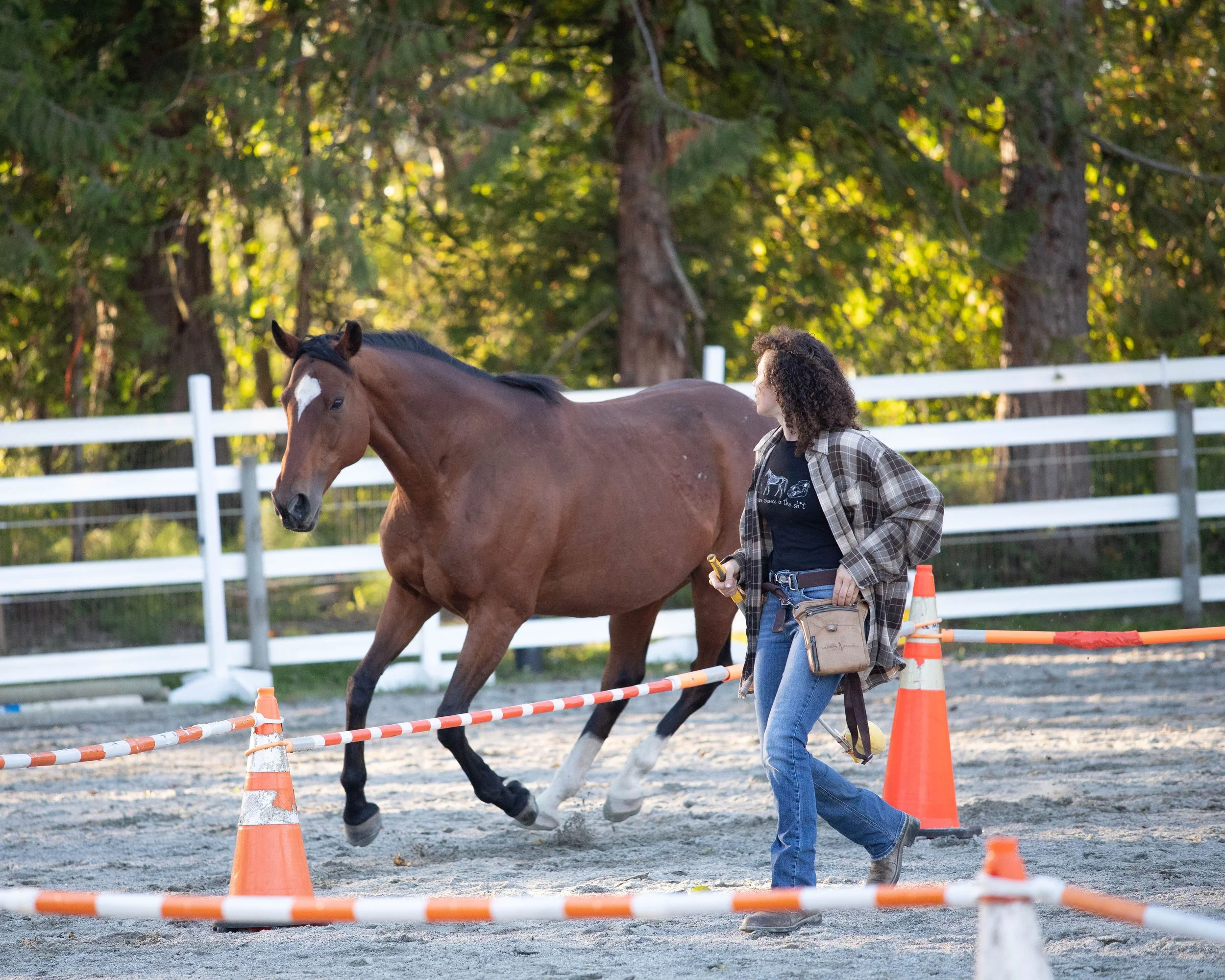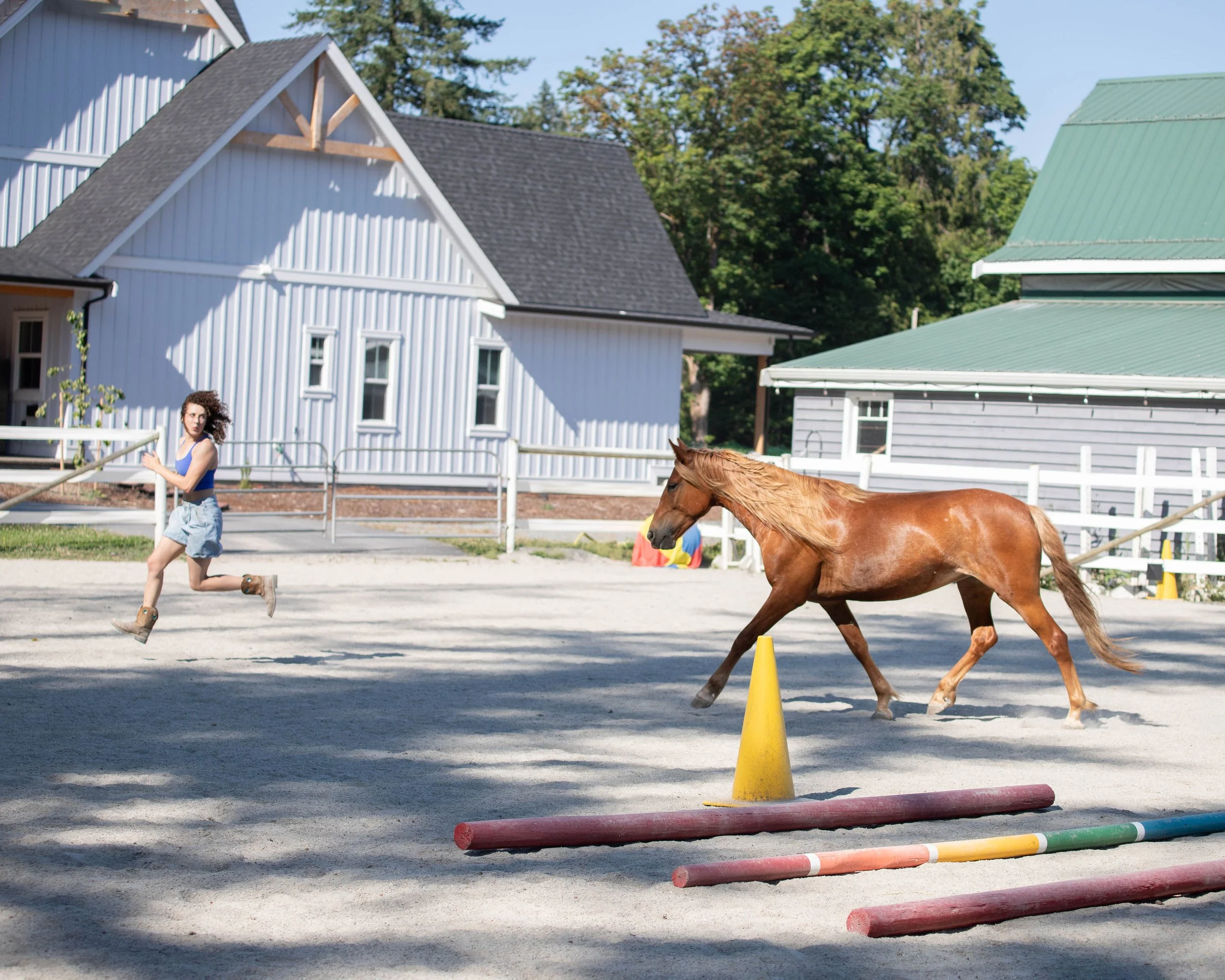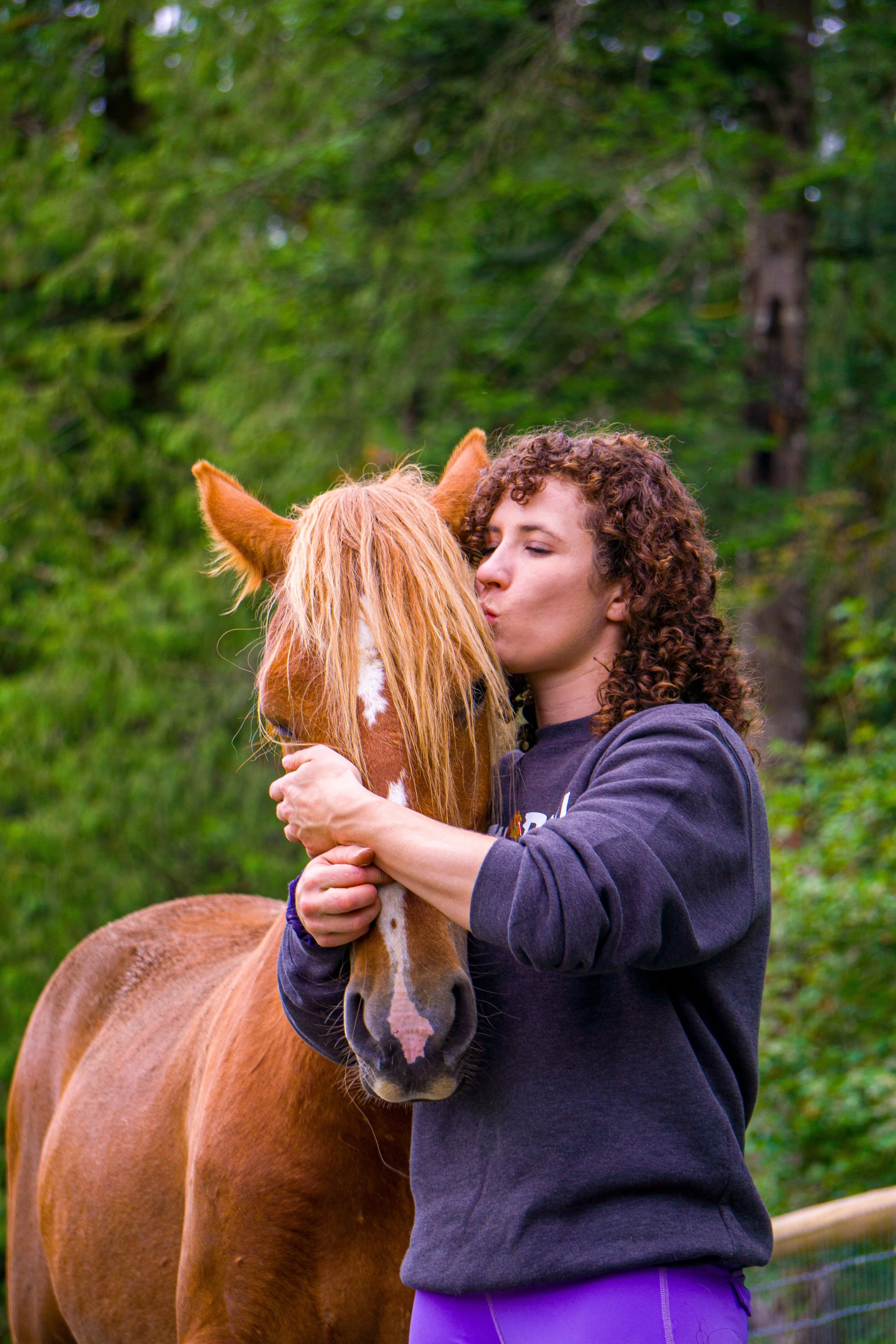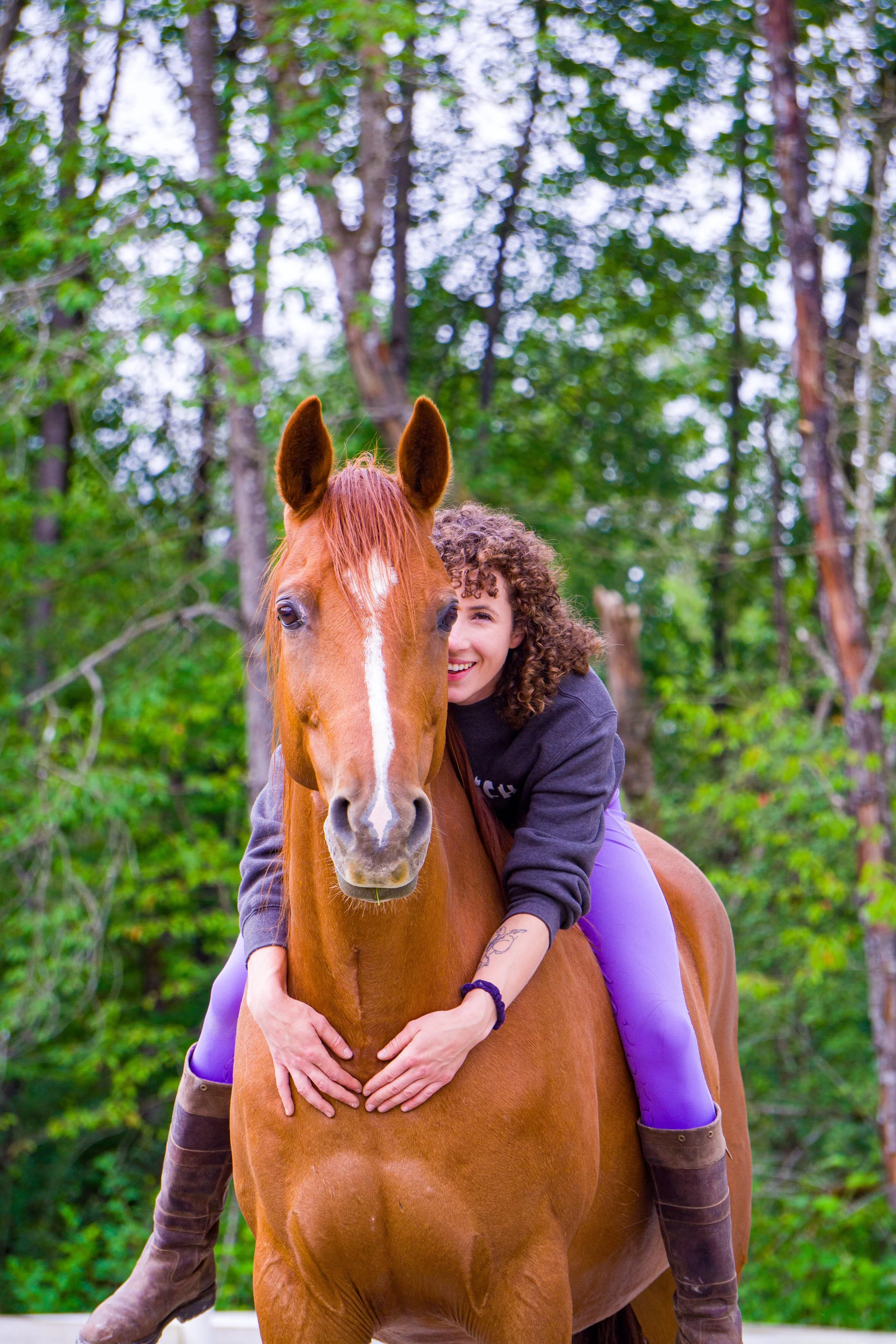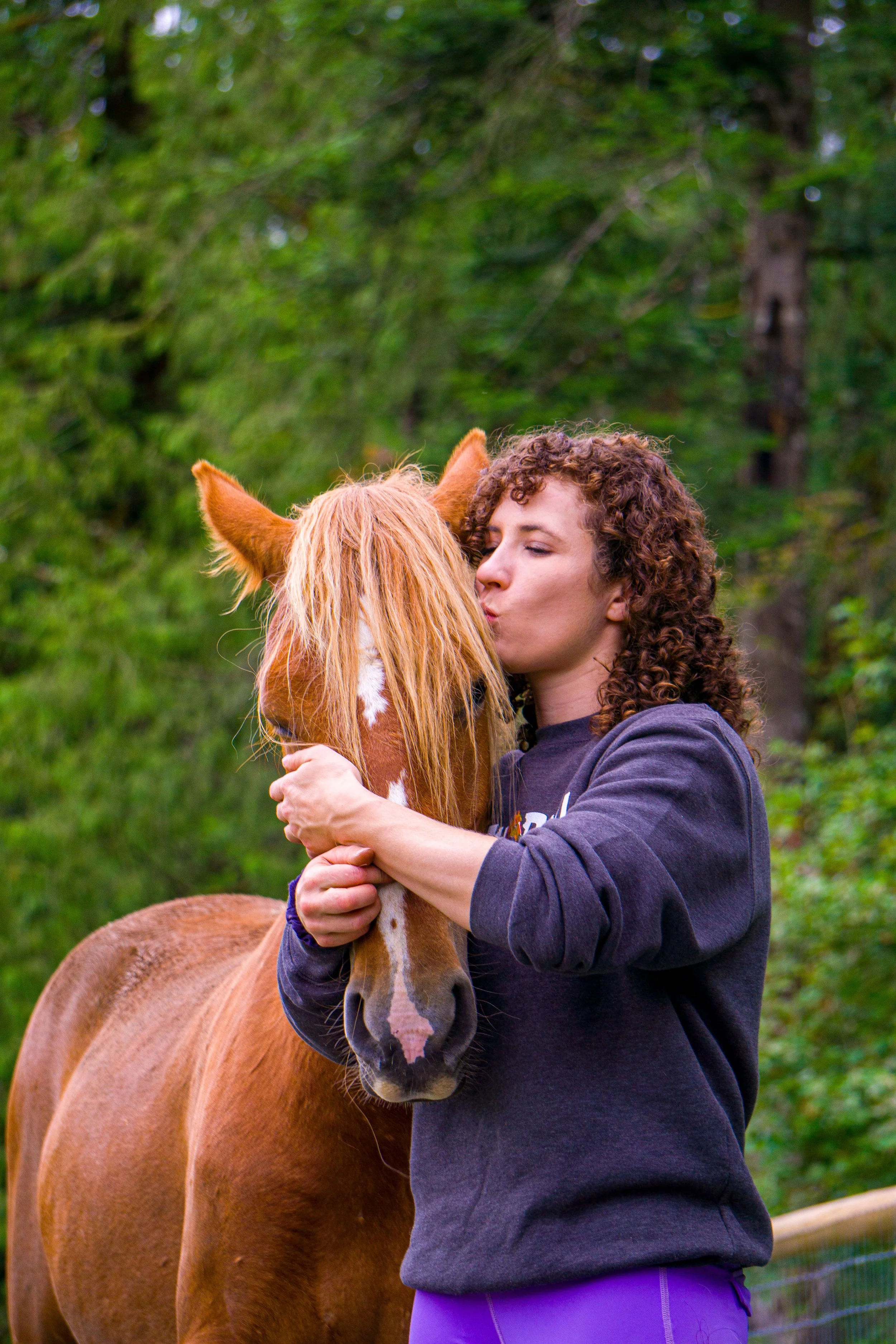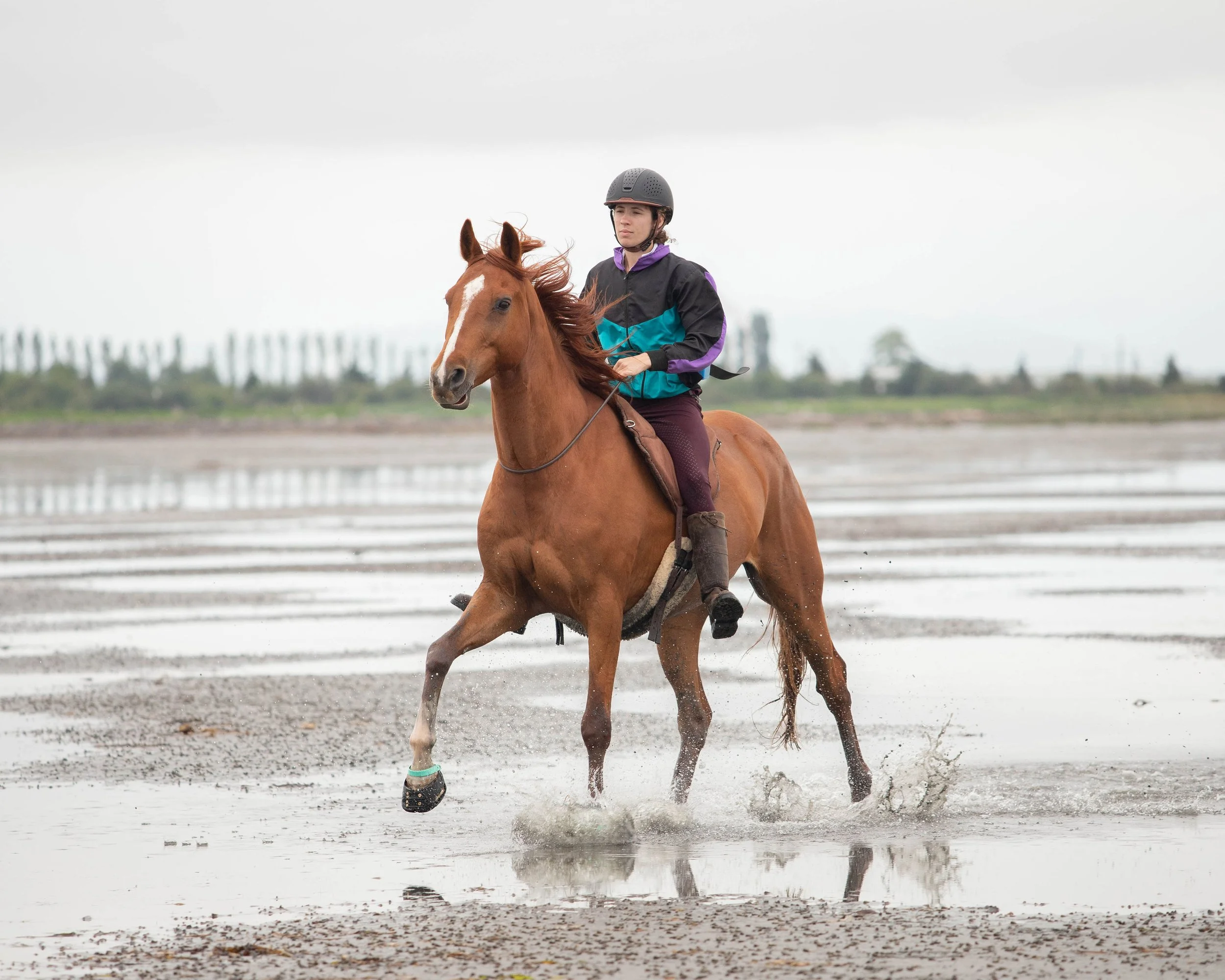
Shelby's personal vision has been shaped with the knowledge of horses as honest, kind and forgiving creatures and a fundamental understanding of how they function as a prey species.
Shelby’s philosophy is founded on the premise that patience, understanding and consistency will breed happy equine partners with a better work ethic and more willing attitude.
Understanding the nature of horses observe and interact with the environment is crucial with creating training programs that honour horses as a species and allow for ethical practice.
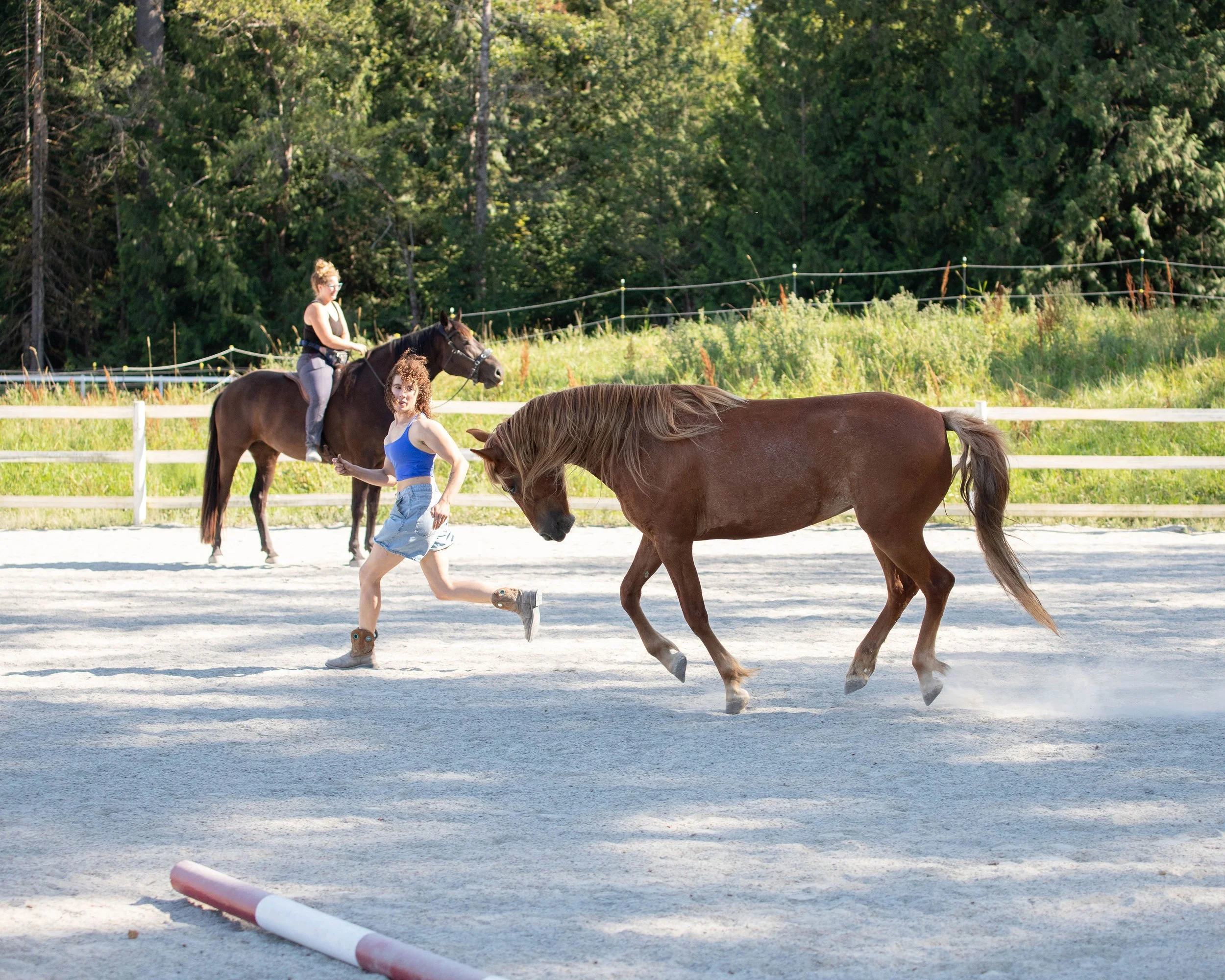
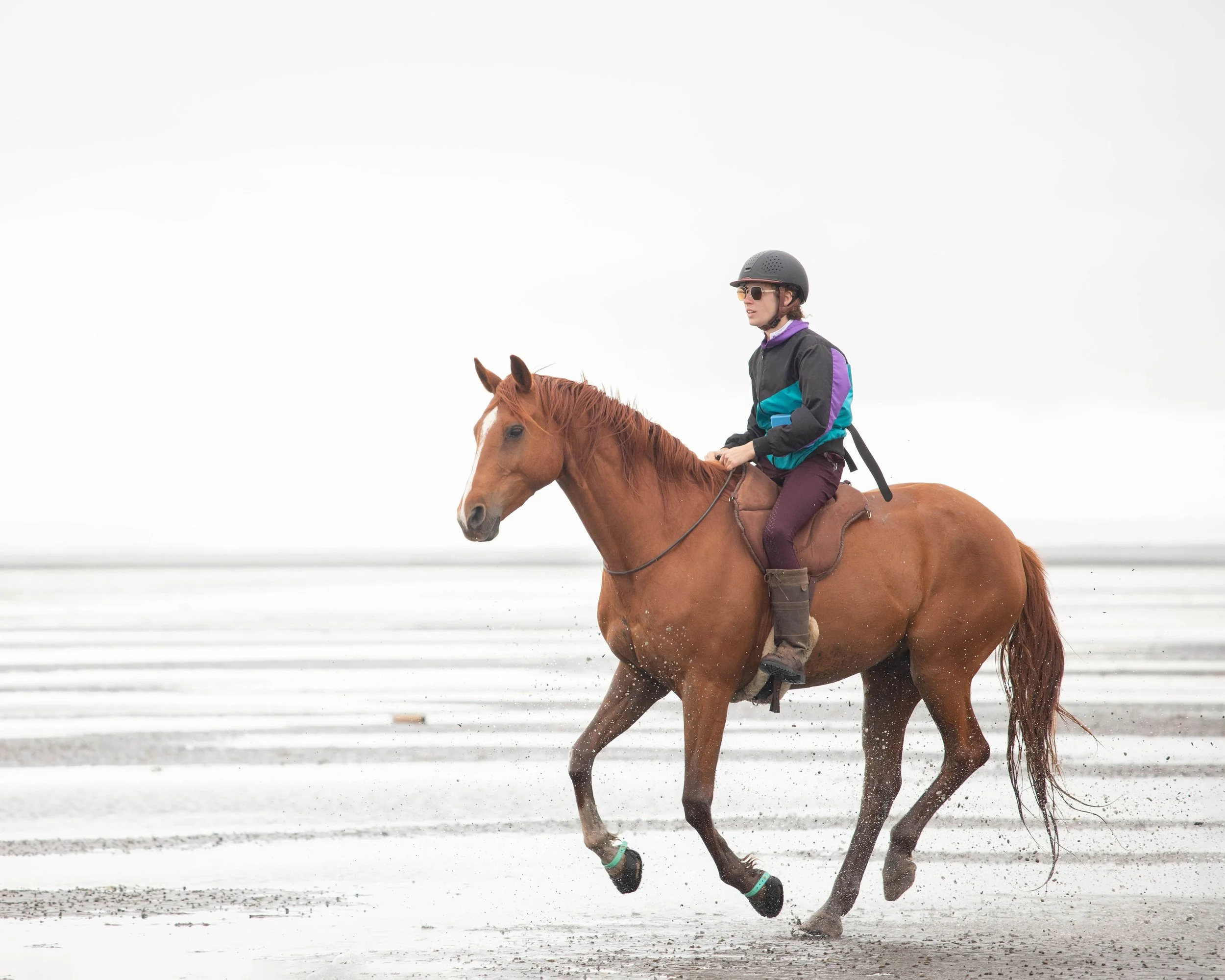
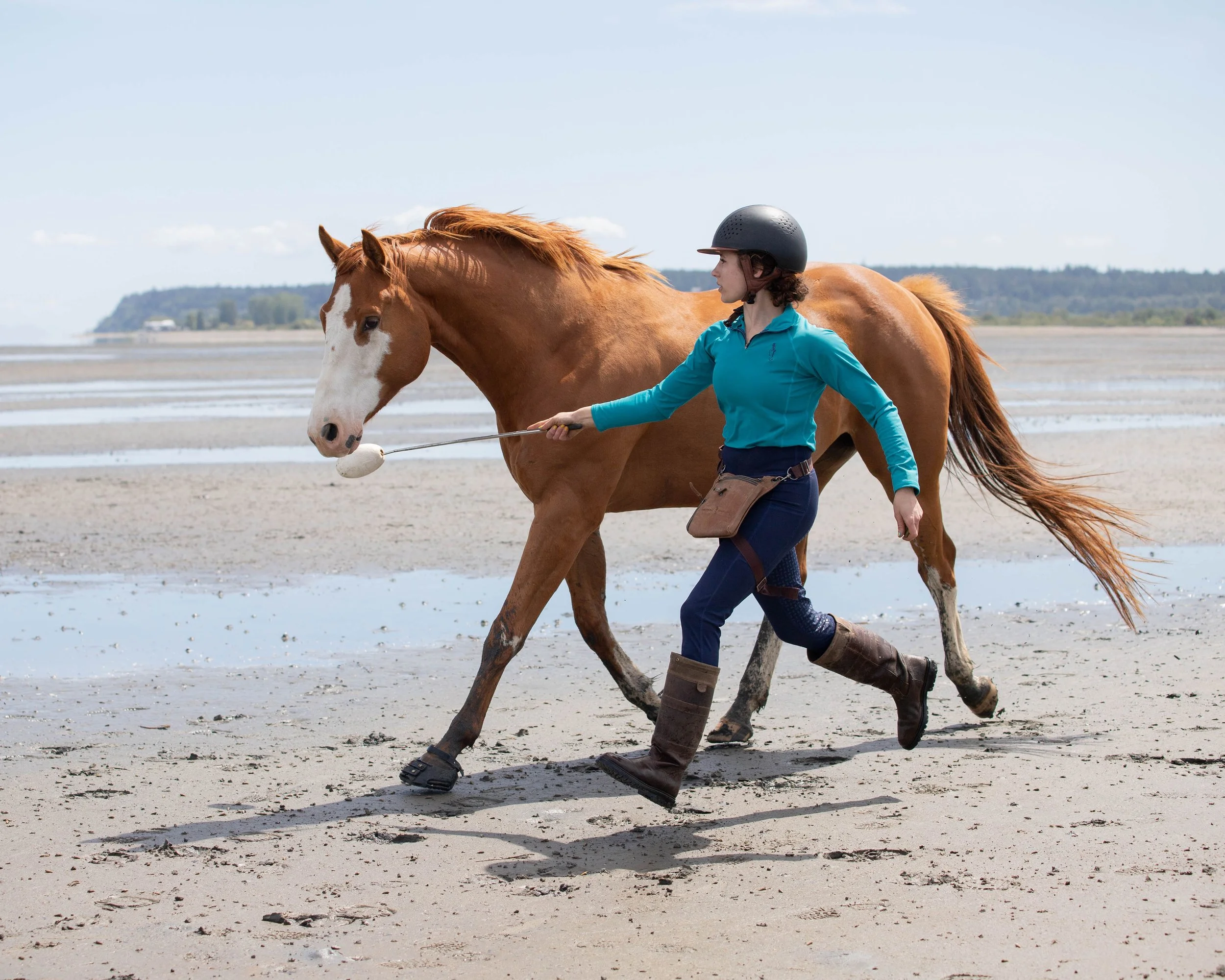
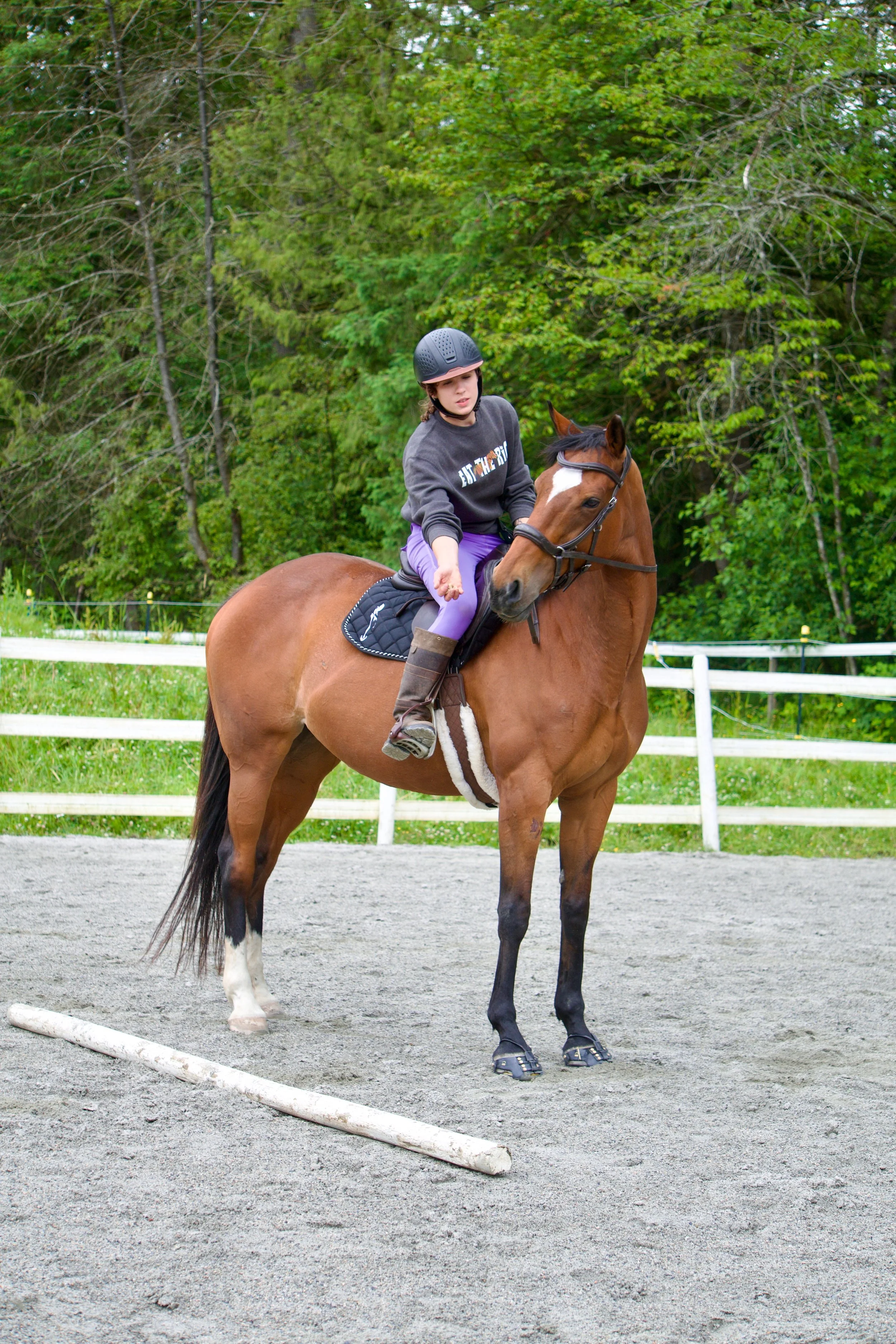
There is no “one way” when training horses and with this in mind, Shelby’s intent is to design individual training programs using methods that best fit the individual horse while keeping in mind their similarities in behaviour and learning theory as a species. By following LIMA principles and utilizing rewards as a primary reinforcer, Shelby creates an environment that makes training fun for the horse and encourages the horse to problem solve and be actively involved in training. With her experience working with neglected and abused horses along with many different breeds, she is comfortable handling a variety of horses coming from all walks of life.
Shelby’s hope in the long run is to see the horse world shift towards a more horse centered industry, one that welcomes new information and uses scientific advancements into equine behaviour as guidance to remain informed. Our currently industry is unfortunately very behind when it comes to welcoming new research and this creates difficult navigation when it comes to improving horse welfare.
By empowering horse owners to critically think and engaged in continued education, Shelby hopes to help to continue to better the lives of horses with evidence based training methods and belief systems that focus on welfare and wellbeing and do not rely on fear and coercion to produce results.