30 Things I’ve Learned About Horses in 30 Years
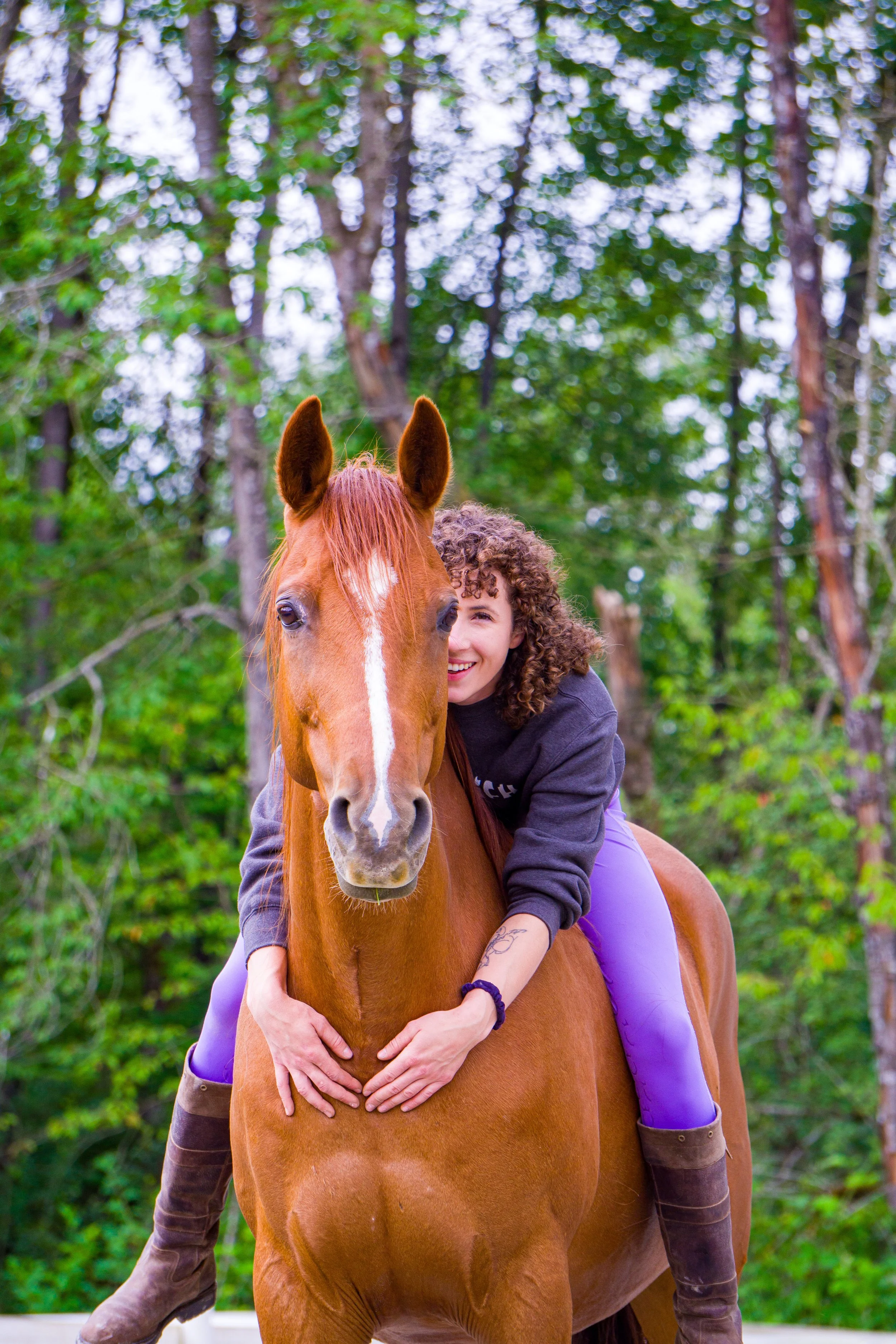
30 things I’ve learned about horses in 30 years, in honour of turning 30 a few weeks ago.
This has become a yearly tradition of mine. This year is the first year where I haven’t actually posted this on my birthday due to my dad passing away in early January, But better late than never!
1. 𝗔 𝗵𝗼𝗿𝘀𝗲 𝗰𝗮𝗻 𝗼𝗻𝗹𝘆 𝗯𝗲 𝗮𝘀 𝗴𝗼𝗼𝗱 𝗮𝘀 𝘁𝗵𝗲 𝗹𝗶𝗳𝗲𝘀𝘁𝘆𝗹𝗲 𝘆𝗼𝘂 𝗼𝗳𝗳𝗲𝗿 𝘁𝗵𝗲𝗺. If their needs are not being adequately met, even the best horse can turn into an unrecognizable animal who is difficult to manage. Horses with met needs are abundantly easier to train and handle, not to mention: HAPPIER.
2. 𝗧𝗵𝗲 𝗲𝗾𝘂𝗶𝗽𝗺𝗲𝗻𝘁 𝗮 𝗵𝗼𝗿𝘀𝗲 “𝗻𝗲𝗲𝗱𝘀” 𝘁𝗼 𝗯𝗲 𝗵𝗮𝗻𝗱𝗹𝗲𝗱 𝗶𝘀 𝗺𝗼𝗿𝗲 𝗼𝗳 𝗮 𝘀𝘁𝗮𝘁𝗲𝗺𝗲𝗻𝘁 𝗼𝗳 𝘄𝗵𝗮𝘁 𝘁𝗵𝗲 𝗿𝗶𝗱𝗲𝗿 𝗻𝗲𝗲𝗱𝘀. Horses don’t choose their equipment, riders do. When people feel compelled to opt for harsh equipment, it’s usually a sign that they do not know how to problem solve the underlying cause of the difficult behaviour that they feel necessitates harsher equipment.
3. 𝗛𝗼𝗿𝘀𝗲𝘀 𝗱𝗼 𝗻𝗼𝘁 𝗻𝗲𝗲𝗱 𝘁𝗼 𝗯𝗲 𝗿𝗶𝗱𝗱𝗲𝗻. This doesn’t mean people can’t or shouldn’t ride them, just that it isn’t a need. A lot of human decision making for horses is centered around our desire to ride them and far too often, this results in riding being placed with greater importance than the actual needs of the horse. This is seen in many boarding facilities, where more emphasis is placed on having an abundance of arenas, lounge areas and amenities for the rider with little focus on turnout areas and adequate space for horses.
4. 𝗚𝗼𝗼𝗱 𝘁𝗿𝗮𝗶𝗻𝗶𝗻𝗴 𝗺𝗮𝗸𝗲𝘀 𝘀𝗼𝗳𝘁 𝗵𝗼𝗿𝘀𝗲𝘀. Horses are a product of their training. So, the more equipment they need to be safely ridden, the more holes there are in training. Prioritizing a good foundation and a soft, relaxed and responsive horse will make just that. Prioritizing moving up the levels without addressing earlier holes in training will make a horse who is difficult to manage without harsher equipment because earlier issues were never dealt with.
5. 𝗦𝗼𝗳𝘁 𝗵𝗮𝗻𝗱𝘀 𝗱𝗼𝗻’𝘁 𝘀𝗲𝗲𝗸 𝘄𝗲𝗮𝗽𝗼𝗻𝘀. As soon as a rider opts for harsher bits, they’ve forfeited their ability to have soft hands. Many attempt to justify the use of harsher bits on the basis that they have “soft hands” but the mechanics of harsher bits make hands less soft so while the rider feels they’re applying less pressure, the horse feels it more. Soft hands don’t set themselves up for easier potential of being harsh.
6. 𝗜𝘁 𝗶𝘀 𝗻𝗲𝗴𝗹𝗲𝗰𝘁 𝘁𝗼 𝗻𝗼𝘁 𝘁𝘂𝗿𝗻 𝗵𝗼𝗿𝘀𝗲𝘀 𝗼𝘂𝘁. It doesn’t matter if the horse competes at an Olympic level and gets the most expensive physical treatments available. It is neglect to not turn them out or for them to be confined to a stall for most of their day. Most horse people can comprehend this as neglect if the animal is a dog or something other than the horse, but way too many people have been conditioned view it as a non-issue for horses to be stabled 20+ hours a day.
7. 𝗠𝗼𝘀𝘁 𝗶𝘀𝘀𝘂𝗲𝘀 𝘂𝗻𝗱𝗲𝗿 𝘀𝗮𝗱𝗱𝗹𝗲 𝗰𝗮𝗻 𝗯𝗲 𝗳𝗶𝘅𝗲𝗱 𝗼𝗻 𝘁𝗵𝗲 𝗴𝗿𝗼𝘂𝗻𝗱. OR at least start to be fixed. There’s no need to get on a horse who is already stressed at the mounting block and buck them out. The issue becomes clear before the rider is ever on. Most under saddle issues can be addressed through management and ground work so that the rider doesn’t need to be put in unnecessary danger and the horse doesn’t need to be unnecessarily stressed.
8. 𝗔 𝗿𝗲𝗹𝗮𝘅𝗲𝗱 𝗵𝗼𝗿𝘀𝗲 𝗶𝘀 𝗮 𝗽𝗿𝗲𝗱𝗶𝗰𝘁𝗮𝗯𝗹𝗲 𝗵𝗼𝗿𝘀𝗲. Relaxed horses won’t behave explosively and unpredictably because they aren’t perpetually trigger stacked. Horses who react “out of nowhere” are likely chronically stressed and there are more subtle signs of tension before those big explosives. Addressing chronic stress will make your horse more resilient to stressors.
9. 𝗜𝘁 𝗶𝘀 𝘂𝗻𝗲𝘁𝗵𝗶𝗰𝗮𝗹 𝘁𝗼 𝗲𝘅𝗽𝗲𝗰𝘁 𝗯𝗹𝗶𝗻𝗱 𝗼𝗯𝗲𝗱𝗶𝗲𝗻𝗰𝗲 𝗳𝗿𝗼𝗺 𝗮𝗻 𝗮𝗻𝗶𝗺𝗮𝗹. Feeing that we are owed obedience all of the time means that we feel entitled to the horse submitting to our demands, even when they are terrified, even when it hurts their bodies and even when everything in them is telling them they shouldn’t. It means we feel that we get the final say on what the horse is capable of, despite not being in their body. It is selfish and unethical.
10. 𝗛𝗼𝗿𝘀𝗲𝘀 “𝗻𝗼𝘁 𝗹𝗶𝗸𝗶𝗻𝗴 𝗼𝘁𝗵𝗲𝗿 𝗵𝗼𝗿𝘀𝗲𝘀” 𝗶𝘀 𝗮𝗹𝗺𝗼𝘀𝘁 𝗮𝗹𝘄𝗮𝘆𝘀 𝗮 𝗺𝗮𝗻𝗺𝗮𝗱𝗲 𝗶𝘀𝘀𝘂𝗲. Horses are herd animals. It should be viewed as a tragedy if we successfully condition the into being more comfortable in isolation. Properly socialized horses who have had adequate space, resources and social contact with other horses aren’t going to choose full isolation. Aggression and a completely negative perception of social contact with other horses is usually an indicator that the horse has not been allowed to develop normal social skills.
11. 𝗔 𝗹𝗼𝘁 𝗼𝗳 𝗽𝗲𝗼𝗽𝗹𝗲 𝗱𝗼𝗶𝗻𝗴 𝘀𝗼𝗺𝗲𝘁𝗵𝗶𝗻𝗴 𝘄𝗿𝗼𝗻𝗴 𝗱𝗼𝗲𝘀𝗻’𝘁 𝗺𝗮𝗸𝗲 𝗶𝘁 𝗿𝗶𝗴𝗵𝘁. Seeing a lot of top riders who don’t turn out their horses or who are seated on horses displaying high levels of stress doesn’t mean that these things are okay. Finding crowds of people willing to justify poor practice even in the midst of credible information that exposes the issues doesn’t mean there is no issue. It means our industry is willing to overlook harm depending on who commits it and how many are guilty.
12. 𝗣𝗵𝘆𝘀𝗶𝗰𝗮𝗹 𝗽𝘂𝗻𝗶𝘀𝗵𝗺𝗲𝗻𝘁 𝗯𝗲𝗶𝗻𝗴 𝗮 𝗴𝗼 𝘁𝗼 𝗿𝗲𝘀𝗽𝗼𝗻𝘀𝗲 𝘁𝗼 𝘂𝗻𝘄𝗮𝗻𝘁𝗲𝗱 𝗯𝗲𝗵𝗮𝘃𝗶𝗼𝘂𝗿 𝗶𝘀 𝗮 𝘀𝗶𝗴𝗻 𝗼𝗳 𝗮 𝘁𝗿𝗮𝗶𝗻𝗶𝗻𝗴 𝘁𝗼𝗼𝗹𝗯𝗼𝘅 𝘁𝗵𝗮𝘁 𝗶𝘀 𝗹𝗮𝗰𝗸𝗶𝗻𝗴. Trainers who opt for physical punishment as their primary response to unwanted behaviour are lacking training knowledge. Punishment being the first choice means that people are not looking deeper at what the underlying causes of behaviours are and are merely looking to suppress them. This is a very trivial understanding of behaviour and it fails to recognize how damaging behavioural suppression is. It is a sign of a trainer who has a very limited knowledge on operant conditioning.
13. 𝗦𝗲𝘁𝘁𝗶𝗻𝗴 𝗵𝗼𝗿𝘀𝗲𝘀 𝘂𝗽 𝗳𝗼𝗿 𝗳𝗮𝗶𝗹𝘂𝗿𝗲 𝗮𝗻𝗱 𝗰𝗮𝗹𝗹𝗶𝗻𝗴 𝗶𝘁 “𝗽𝗮𝗿𝘁 𝗼𝗳 𝘁𝗵𝗲 𝗽𝗿𝗼𝗰𝗲𝘀𝘀” 𝗶𝘀 𝗯𝗮𝗱 𝘁𝗿𝗮𝗶𝗻𝗶𝗻𝗴. If, when teaching a new behavior, a trainer has to first set the Horse up to perform the behaviour wrong, to the point of panicking, this is bad training. We see this with tying a lot where trainers will hard tie a horse, watch them pull back and then say it’s part of teaching a horse to tie. But in their training practice, they’ve caused the horse to offer the wrong and undesired behaviour first before getting their desired outcome. Good training should seek to avoid dangerous and unwanted behaviour in the first place.
14. 𝗛𝗼𝗿𝘀𝗲𝘀 𝗮𝗿𝗲 𝗳𝗹𝗶𝗴𝗵𝘁 𝗮𝗻𝗶𝗺𝗮𝗹𝘀. 𝗪𝗲 𝘀𝗵𝗼𝘂𝗹𝗱 𝘁𝗿𝗲𝗮𝘁 𝘁𝗵𝗲𝗺 𝗮𝘀 𝘀𝘂𝗰𝗵. Far too many people get into working with horses and end up being frustrated when horses are frightened of new things and they can’t introduce things quickly without having a major fear response. They then get mad at the horses and traumatize the horses because of what is a normal flight reaction. People should not be working with flight animals if they are going to feel angry or inconvenienced by flight behaviours and not take this into account in how they introduce new things in training.
15. 𝗪𝗵𝗮𝘁 𝗵𝗼𝗿𝘀𝗲𝘀’ 𝗹𝗶𝘃𝗲𝘀 𝗹𝗼𝗼𝗸 𝗹𝗶𝗸𝗲 𝗼𝘂𝘁𝘀𝗶𝗱𝗲 𝗼𝗳 𝗿𝗶𝗱𝗶𝗻𝗴 𝗺𝗮𝘁𝘁𝗲𝗿𝘀 𝗮 𝗹𝗼𝘁 𝗺𝗼𝗿𝗲 𝘁𝗵𝗮𝗻 𝗮𝗻𝘆𝘁𝗵𝗶𝗻𝗴 𝗿𝗲𝗹𝗮𝘁𝗲𝗱 𝘁𝗼 𝗿𝗶𝗱𝗶𝗻𝗴. Riding encompasses about an hour of a horse’s daily time budget (and most people aren’t riding daily). This leaves 23 more hours of the day being spent doing whatever the horse does when they’re not being ridden. Their entire life, basically. So, it’s important for us to make sure that it’s a life worth living and that their needs are met outside of when we are at the barn spending time with them.
16. Horses can teach us a lot about emotional regulation. Working with a flight animal needs that emotional regulation is a very important part of training because it helps us teach them to not immediately respond during times of fear. However, when we lack our own ability to regulate our emotions, it makes it even harder to help a flight animal feel safe around us. Horses offer us an important lesson. The lesson of learning how to live in the moment, how to regulate our own emotions and how to respond with softness. When we could learn how to do this, the possibilities of what we could do with our horses open up immensely. It also improves how we interact with people and other animals in our day-to-day life outside of the barn.
17. What is popular and trending with the people at the top of the sport is not necessarily right. There is a lot of elitism in the sport and we see a lot of politics that are not so dissimilar to what we are seeing in regular human society. Practises that are employed by people at the elite level, those who are generally rich and privileged, aren’t necessarily the best. However, our industry often refers to them as the best on the assumption that people with this much money and access would not be utilizing practises that are harmful. But, research suggests otherwise. A lot of prevalent horseshoeing practises are actually detrimental to the foot. Training practises like hyperflexion are frequently seen at the top levels and are harmful to the horse. Lack of turnout and social opportunities are also very common for high value horses and are very detrimental. The horse world functions within a capitalistic society, so it’s important to keep in mind that what is commonly seen is often what is the most lucrative and profitable, not what is the most ethical.
18. Making mistakes is part of growth and it is not more noble to never change your perspectives. One of the most profound signs of growth and that someone is a trustworthy person who will be a good teacher is their capacity to change their opinion with new information. Given the fact that there are so many different opinions in the Horse world, many of us grow up being taught things that we will later learn are not correct. We have the opportunity to change once we realize this, or commit to doing the thing wrong for years on the basis that it is the way things have always been. It can be hard to admit that we have engaged in practises that have harmed horses inadvertently. But the alternative to doing this is to refuse to admit any wrongdoing and continue using practises that are harmful. It is an admirable trait to change when you are offered new information. It is not a fault. It is a sign of growth.
19. We can love horses with all our hearts but if we aren’t loving them in the way they need to be loved, it won’t feel like love to them. Horses need friends, freedom and forage. We can love horses, but it is a selfish love if it is a love that is conditional on depriving them of their basic needs and prioritizing our use of them. Love is not enough to conquer unmet needs and we are not entitled to having horses if we cannot care for them properly.
20. The number of years you’ve worked with horses is not necessarily a measure of how much you know. We can waste years buying into outdated information, tradition, and harmful training practices. These years are worth a lot less than years that are spent with an open mind, hunger for learning and the capacity to be wrong. Plus, these years of open-mindedness often allow for a lot more personal growth and gain in knowledge. Beware of the Horse person who thinks their perspective is automatically superior just because they’ve been around horses for a certain number of years. There is something to learn from people from all areas of horses, including people who are newbies.
21. Hands on experience is important, but so are book smarts. Having an understanding of operant conditioning and behavioural science is necessary when it comes to training effectively. Of course, being able to apply these books, but it’s practically is also important. But, firsthand experienced with the biased lens of your perspective does not hold The same weight as has on experience with an understanding of Equine behaviour as a science. We could be wrong, science helps to eliminate bias and knowledge of behavioural science is invaluable in training any animal.
22. Rewards based training has been shown to be as effective with horses as it is with dogs and other animals. Much of the Horse industry rejects this notion, but that doesn’t make it any less true. Rewards based trading has been used on horses with high success. The idea that people perpetuate that it’ll make horses, dangerous or more prone to biting is unfounded. Training with food has been utilized on animals that are far more unpredictable, dangerous, and less domesticated than horses. Many of the concerns that people have are rooted in their own misconception of the practice and their own misapplication of operant conditioning. People don’t need to utilize reward space training if they don’t want to, but they also don’t need to spread misinformation.
23. If you are more willing to fix probably behaviours under saddle, than you are a stressed behaviours that impact your horse’s day-to-day life, you’re being selfish. In my practice as a Horse behaviour consultant, I have repeatedly noticed that people will view unwanted behaviour under saddle as something to fix. For example, a horse refuses a job because they are scared. Most riders will not just take this one off occurrence and say that the horse does not like jumping, they will work with the horse to help them overcome the fear of jump jumping. On the flipside, if a horse struggles with interacting with other horses, being in turnout or other normal horse behaviors, many people often decide that the Horse simply does not like those things instead of viewing it as a behavioural issue that can also be addressed. We should not only be motivated to problem solved when it impacts our ability to enjoy the horse. In fact, we should be more motivated to address issues that greatly impact the well-being of our horse.
24. Expensive supplements and treatments are often used as a Band-Aid to cover up issues that are being caused by deeper issues like management issues. The horse who stands in a small stall, all day is not going to build healthy hose that they otherwise could if they were moving around on varied terrain, no matter the supplements you get them. No amount of calming supplements will make up for a horse who is spending 20+ hours Stable. No amount of topical hoof products will make up for issues caused by poor farriery. We have to actually look at the underlying causes of issues instead of seeking Band-Aids, that might marginally improve something, but never actually address the cause.
25. Most training gadgets have no correct use. The Pessoa lunging system, draw reins, tie downs, chambons, de gouges etc All function by pulling the horses head down and in by force. This does not count for the horses, current level of flexibility and muscular fitness. Allowing the Horse to find the right position on their own and slowly building towards that is always going to have a better end result than forcing it. We need to allow horses to tell us where their current comfort zone and fitness zone lies, instead of deciding it for ourselves.
26. The industry wide perception of how horses should be started under saddle, often isn’t fair to their fitness level or their growth. You wouldn’t start going to the gym and then immediately start packing weight and running on the treadmill because it would hurt you. We expect horses to carry a person and be able to do so for lengthy periods of time at all gaits, often times in the span of just 30 days. The active packing weight, even at the walk for a short time, is a lot to ask of a horse who has not done that. We need to do a better job as slowly preparing horses and realizing how big of an ass it really is. I think a lot of injuries and long-term back problems could be avoided if this was done. We also need to take it into a account, their age, and what state of growth they are currently in and whether or not it is fair to ask them to pack the weight of a rider in the first place.
27. Money can buy your way into the horse world, without question. There are tons of amazing riders who fall through the cracks and go unknown because they don’t have the funds to pay for frequent lessons, horse shows, clinics and more. The Horse industry collectively needs to make more of an effort to make the sport as inclusive as we possibly can because it will diversify Horse people that are really beneficial way. We also need to start to normalize the idea that people can be phenomenal riders without ever entering the show ring. Showing just provides people a venue to show off skills that they have mostly developed outside of competition. It tests, skill, but it does not define skill. A rider is no less of a rider for not showing.
28. Developing better inner trust will make you a better horse person. The need for constant validation from others is harmful. Know who is in your inner circle, and who you can trust for advice. But, also, Learned to trust yourself to be open to continuing growing and learning. Be able to feel confident in your ability as a Horse person even if not, everyone validates you because you will never end up pleasing everyone. At least please yourself by being someone you like and someone that you feel is a good advocate for your horses. Believe in your ability to continue your learning and critically think and pursue new knowledge.
29. If you no longer want your horse, if you can’t ride them, there’s no way around the fact that you love the sport more than the horse. There used to be a day where I would argue against this point tooth and nail, insisted that I loved the horse more, but couldn’t afford a rideable horse and an rideable one. But, ultimately, if your horse has the same value to you, whether they are rideable or not, you’d keep them in their time of need, rather than making them someone else’s problem to take care of. Being honest with ourselves about what our actions actually say about our underlying motivations is important and holding ourselves accountable and recognizing where priorities lie. I used to value riding more than the horse, and it ended up in me, inevitably making poor decisions that were harmful to the Horse, despite having good intentions and loving the horse. Realizing what my ashes exposed about, my priorities was a necessary part of inner healing and personal growth. As an industry, the horse industry prioritizes horses as writing animals above all else, and it makes it to that horses are devalued when they are not rideable and are not as wanted. So, if you as their owner does not want your horse once they are not rideable, keep in mind that all of the people who haven’t had the time to bond with the horse aren’t more likely to care for your horse than you are. We have the same responsibility to advocate and care for horses as we do with other animals. If you wouldn’t give your dog away when they are no longer able to walk and hike as they used to, you shouldn’t do the same to your Horse. Either keep them to retirement or give them a dignified end.
30. One of the best skills we could learn as horse people is finding fun and enjoyment with horses outside of riding. Learning to enjoy the little things. Becoming the type of person who doesn’t feel upset or distraught if you have to go without riding for an extended period of time. This will save you a lot of grief if you ever do need to give your Horse time off, But it will also increase the emotional value of your Horse to a point where it is not so centred around riding. Many of us were brought up with riding being prioritized as the only thing that we ever did when we saw a horses, So it’s no surprise that this carries into adulthood. But it is up to us to undo those unhealthy, thinking patterns and make things more positive for ourselves and our horses.
There is so much more that I have to learn. And so much more that I have learned that I haven’t been able to fit into a singular post.
The last five years have been an exceptional period of learning and growth for me, shaping my perspective of horses and allowing me to find my most authentic self. I truly feel like I have learned more of those years than many years prior because of the shift that I have seen in my personal priorities.
So, here is too many more years of learning and growth as I begin my 30th year on this planet. Thank you for reading.